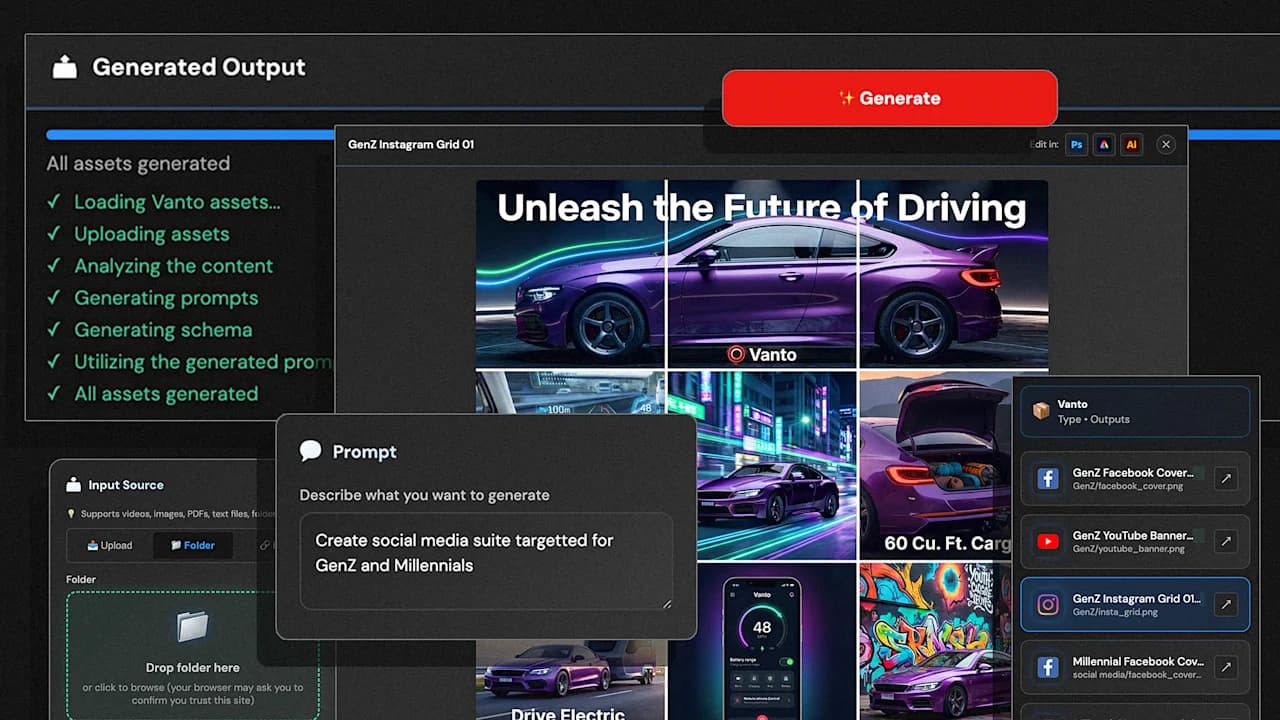
Photo via Fast Company
Adobe is expanding its artificial intelligence capabilities with Asset Amplify, a new experimental tool that automatically generates websites, social media content, and print materials customized for specific demographic audiences. The tool represents the latest addition to Adobe's growing suite of AI-powered design features aimed at streamlining the creative process for brands of all sizes. Asset Amplify is among seven experimental projects Adobe will showcase at its 2026 Summit conference this week, part of the company's annual 'Sneaks' program that tests experimental features and determines which ones warrant full product development.
The way Asset Amplify works is relatively straightforward: brands upload existing marketing assets—commercials, product photos, social posts—and then specify their target audience through demographic or regional parameters, such as Gen Z consumers in the Southeast or millennials on the West Coast. The AI then generates drastically different creative approaches tailored to each segment's preferences and values. In Adobe's demo using a fictional luxury electric vehicle brand, the Gen Z version featured bold neon visuals and performance-focused messaging, while the millennial version emphasized minimalist design and family-friendly positioning.
For Charlotte-area design agencies and marketing firms, this tool could significantly accelerate the brainstorming and prototyping phases of campaign development. Rather than manually sketching out multiple audience variations, teams could generate initial concepts in minutes, then refine them in Adobe's traditional design software. The technology relies on audience data and Adobe's Content Analytics platform, which analyzes what design elements resonate across different demographic groups. However, Adobe positions Asset Amplify as a brainstorming aid rather than a finished-product solution—human designers still play a critical role in polishing and customizing the output.
The shift toward AI-driven tools is accelerating across Adobe's development pipeline. According to Eric Matisoff, principal evangelist of analytics and data science at Adobe, the company received over 500 product ideas this year compared to 100-150 in the previous year, largely enabled by improved AI capabilities. About 30% of Sneaks typically advance to official products. For Charlotte-based businesses relying on design and marketing services, Adobe's continued investment in audience-focused AI tools suggests that automation and personalization will become increasingly central to how brands approach creative work in 2026 and beyond.