Photo via Fast Company
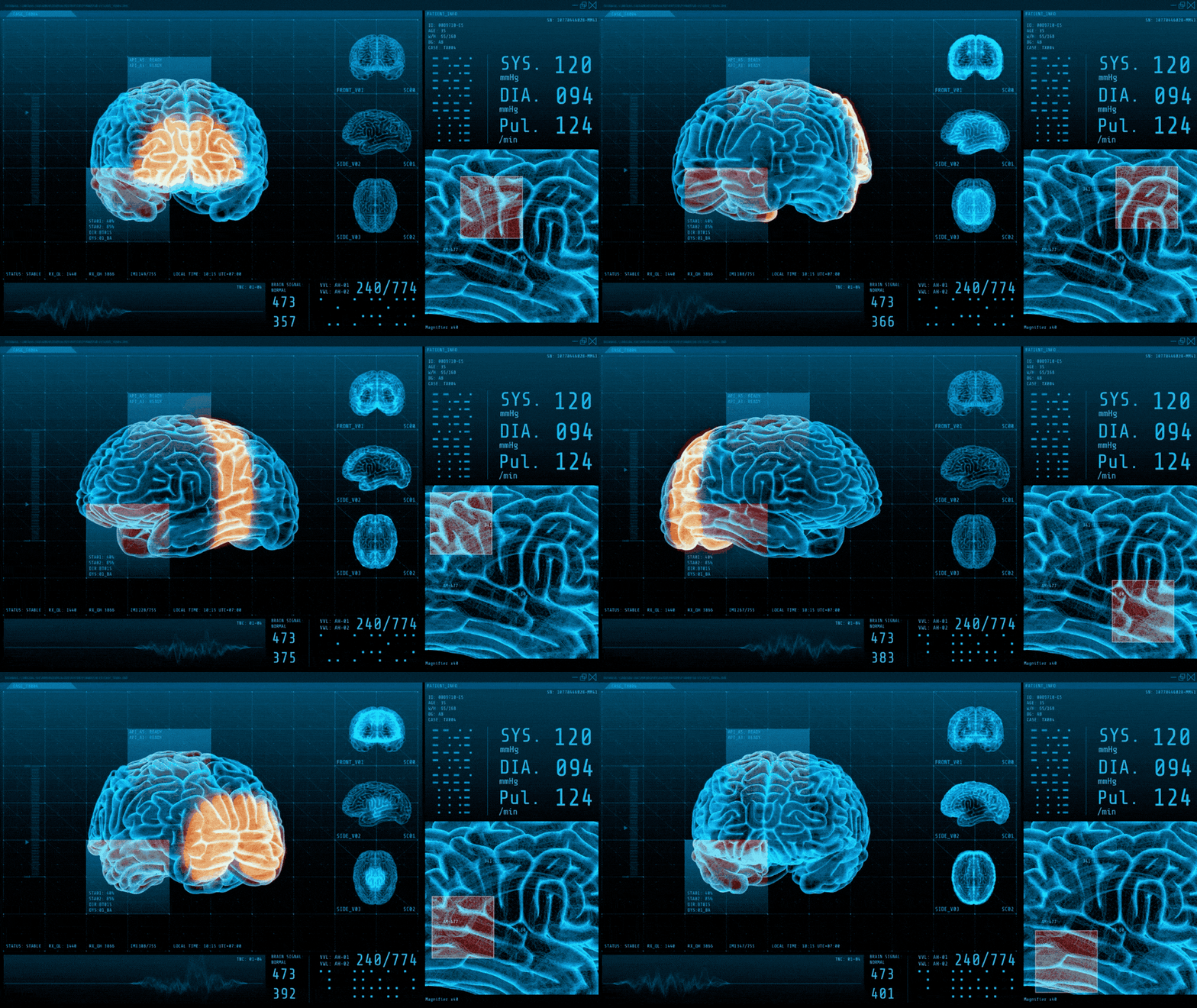
Consumer hardware has followed a predictable pattern for decades: technology emerges in specialized, clinical environments before engineering breakthroughs allow it to shrink down and integrate into everyday products. Heart rate monitoring took 100 years to transition from hospital equipment to wristbands. Active noise cancellation spent decades in aviation before Apple and Sony made it standard in premium headphones. According to Fast Company, brain-sensing technology is entering that same inflection point—and companies that move early will define the category for everyone else.
The scientific foundation for electroencephalography (EEG) isn't new; Hans Berger first recorded human brainwaves in 1924. What changed recently is engineering. Advances in soft, conductive fabric sensors now allow dry electrode capture from ear cushions without the 20-to-45-minute clinical setup. Machine learning trained on thousands of hours of real-world brain data can isolate neural signals from background noise in real time. EEG systems now run on standard Bluetooth chips with battery life comparable to high-end noise-canceling headphones. The three breakthrough problems—sensor miniaturization, signal processing, and power efficiency—have been solved simultaneously.
For Charlotte-area hardware and consumer electronics companies, the business case extends beyond feature parity. Brain-sensing integration isn't simply adding sensors; it creates a new computing layer with recurring revenue potential through subscriptions, premium tiers, and enterprise licensing. Early applications already shipping include focus detection, cognitive fatigue monitoring, and workload estimation—capabilities with immediate appeal to productivity-focused consumers and enterprises managing workforce performance. Companies collecting brain data first will build proprietary models that improve over time, creating a data moat difficult for competitors to replicate.
The regulatory landscape demands attention. Colorado recently passed the nation's first state privacy law explicitly protecting neural data, signaling that other states will follow. Product teams evaluating integration should prioritize clear answers on data protection architecture, cloud versus on-device processing, and the distinction between wellness claims and clinical claims. The gaming wearables market alone is projected to grow from $5 billion to $20 billion by 2034, with the broader brain-computer interface market expected to exceed $52 billion globally. For manufacturers of headphones, gaming headsets, AR glasses, or hearing aids, the timing question isn't whether brain sensing matters—it's whether you're moving fast enough to capture that opportunity.