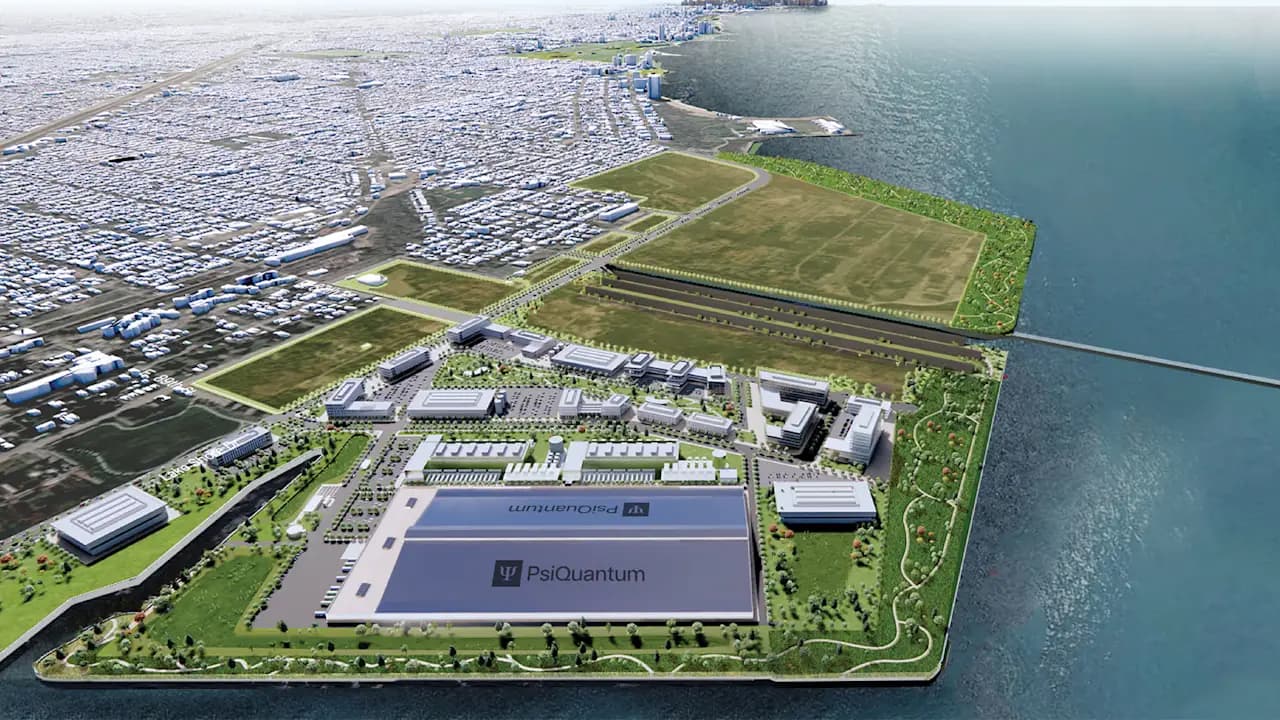
Photo via Fast Company
The Midwest is positioning itself as a serious contender in the quantum computing race, with Chicago leading efforts to transform the region into what industry observers call the 'Silicon Prairie.' According to Fast Company, a decommissioned steel mill on Chicago's South Side is being redeveloped into the Illinois Quantum and Microelectronics Park, a 128-acre campus expected to open in 2027. The symbolic transformation—from manufacturing to high-tech innovation—underscores how regions dependent on legacy industries can pivot toward emerging sectors.
The Chicago Quantum Exchange, a consortium launched in 2017, has assembled a powerful coalition of research universities, federal laboratories, and corporate partners to build an ecosystem for quantum development. The group includes major institutions like the University of Chicago, Argonne National Laboratory, and Purdue University, along with more than 50 companies ranging from Fortune 500 firms to startups. According to the CQE's CEO, the overarching strategy is creating a pipeline where basic research transitions directly into commercialized products—from quantum sensors to pharmaceutical breakthroughs.
What makes Chicago's approach distinctive is its bipartisan, multi-state coordination. Illinois and Indiana have collaborated on infrastructure projects like the Quantum Corridor, a 12-mile networking system that recently demonstrated quantum-secured communications across state lines. Both governors have backed tax incentives and public funding to attract quantum talent and companies, recognizing that regional competitiveness requires cooperation beyond traditional political boundaries. Similar efforts are underway in Maryland and the Pacific Northwest, creating what experts describe as a national competition for quantum dominance.
For Charlotte-area business leaders, the Midwest's quantum strategy offers relevant insights into building specialized industry clusters. By combining workforce development, institutional research strength, and targeted government incentives, regions can attract emerging technology sectors and retain talent. The challenge facing quantum hubs nationwide is acute: the industry lacks sufficient scientists and engineers. Any region seeking to capture emerging tech opportunities must address this talent pipeline gap before competitors do.